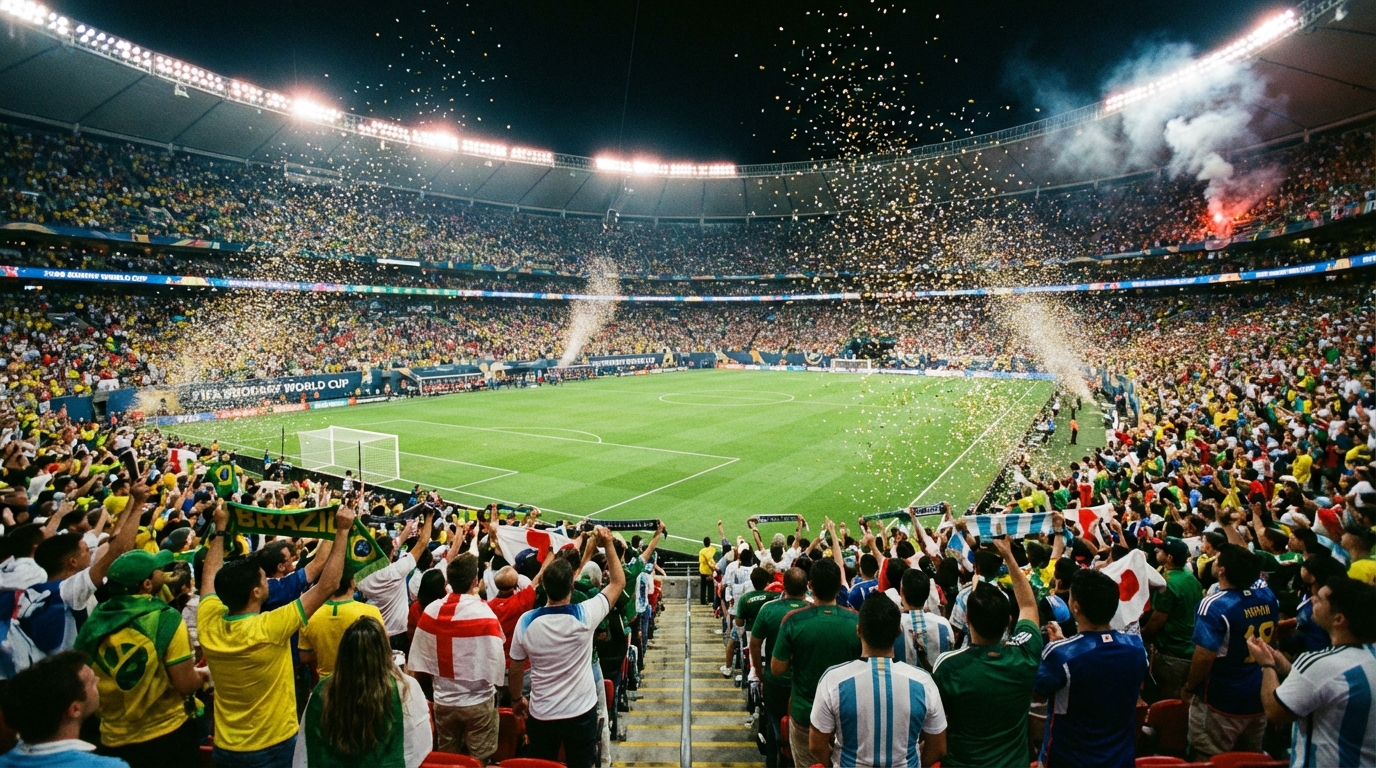
Picture this: 80,000 people in a stadium, every nation's flag rippling under floodlights, two sets of fans trading songs before a single ball has been kicked. The World Cup does not just show you football — it drops you into something far larger than any club match, league title, or domestic cup you have ever attended. For first-time fans, World Cup 2026 is the best possible introduction to the tournament: the biggest edition in history, spanning 104 matches across 16 cities in the USA, Canada, and Mexico, with more matches, more nations, and more host cities than any previous World Cup. The planning can feel overwhelming before it feels exciting. There are entry documents to sort, tickets to secure months in advance, cities to choose between, and costs to budget that stretch well beyond the ticket price. But once you are inside that stadium for kick-off — the noise, the colour, the shared electricity of 80,000 strangers all willing the same outcome — every bit of effort disappears. This guide covers everything a first-time fan needs to know to plan, prepare, and experience World Cup 2026 properly. Start here, then work through our full World Cup 2026 trip planning checklist to build your complete itinerary.
World Cup 2026 features 104 matches played by 48 national teams across 16 cities in the USA (11 venues), Canada (2 venues), and Mexico (3 venues). The expanded 48-team format — introduced for the first time at this tournament — adds a new Round of 32, giving fans more knockout football than ever before. For first-time attendees, the sheer scale creates enormous opportunity: with 104 matches spread across 4 weeks, securing at least one ticket to a live game is more achievable than at any previous World Cup.
Source: FIFA.com official 2026 tournament format

Photo by Vienna Reyes on Unsplash
What to Expect at Your First World Cup Match
Nothing fully prepares you for your first World Cup match — but knowing the shape of the day helps you enjoy every part of it instead of spending the first half working out what is happening around you.
Before You Get to the Stadium: Fan Zones and Pre-Match Atmosphere
The World Cup experience begins hours before kick-off. Every host city operates official FIFA Fan Zones — free public spaces near stadiums and in city centres with big screens, live music, food stalls, and football activities. These are worth arriving early for even if you have a match ticket. The energy in a fan zone on matchday is electric and gives you time to take in the scale of the event before you are inside the ground.
- FIFA Fan Festivals are free to enter — no match ticket required
- Fan Zones typically open 4–6 hours before kick-off
- Buy local food and drinks in the fan zone — stadium concession prices are significantly higher
- Connect with fans from other nations — the fan zone is where scarf swaps and flag exchanges happen most organically
- Leave the fan zone at least 90 minutes before kick-off to clear stadium security in time
Arriving at the Stadium
Allow a minimum of 90 minutes between leaving the fan zone and kick-off. World Cup 2026 security at US venues in particular is thorough — bag checks, metal detectors, and ticket scanning add time to entry. Arriving early also means you see the stadium fill up — one of the best visual experiences of any first World Cup.
- 90 minutes before kick-off: minimum recommended arrival at the stadium gates
- Have your match ticket accessible before you join the queue — have it open on your phone or printed and ready
- Bag check: ensure your bag meets the venue size policy (typically 30x30x15cm) before you arrive — staff will send you back to a bag storage facility if it doesn't, which costs time and money
- Clear liquids only in transparent bottles in most venues — check your specific stadium's rules on the FIFA app
- Security queues move fastest at less-used entry gates — if you see a shorter queue at a different gate to your assigned section, use it (confirm your section is accessible from that gate first)
Inside the Stadium: The Match Experience
The first time you walk up the stadium ramp and see the full pitch below you is a moment that every World Cup fan remembers forever. Take it in. Once you are in your seat, the pre-match entertainment, national anthems, team walk-outs, and crowd noise build to kick-off in a way that is simply not replicable on television.
- National anthems are the most emotionally charged pre-match moment — be present for them, not queuing for a drink
- The sound levels inside a full World Cup stadium peak 100–110 decibels during goals — ear protection is not unusual and is a sensible precaution
- Take advantage of half-time — the concourse buzz between halves is like a mini street festival; it is part of the experience
- If your team loses, stay for the full match — the respect shown to the winning team's fans by neutrals and opponents is one of the great traditions of the World Cup
- Keep your phone charged — you will take more photos than you expect; a power bank is essential
Post-Match: Getting Out and Where to Go
Exiting a World Cup stadium with 70,000–90,000 other fans requires patience. Do not rush the exits immediately at the final whistle — wait 10–15 minutes for the initial surge to pass if you have flexibility. Post-match is when the fan culture is at its warmest: opposing fans celebrating together, neutral fans congratulating the winning supporters, and bars near the stadium turning into impromptu international gatherings.
- Wait 10–15 minutes after the final whistle before heading to the exits — the initial crowd surge is the most uncomfortable part
- Pre-arrange a meeting point with your group before the match — phone signal can be patchy in and immediately around a full stadium
- Use public transport if available — ride-share surge pricing near World Cup venues can be 4–5x normal rates immediately post-match
- Download the host city's transit app before the match day — not after
💡 The Single Most Important Match Day Rule
Arrive at the stadium 90 minutes before kick-off. Not 60 minutes. Not 45. This single decision determines whether your first World Cup match day feels exhilarating or stressful. Security queues, bag checks, finding your seat, and getting a pre-match drink all take longer than you expect at a tournament of this scale. Every first-time fan who arrives late reports the same regret.
How to Buy World Cup 2026 Tickets as a First-Time Fan
Tickets to World Cup 2026 are sold exclusively through FIFA's official ticketing platform at fifa.com/tickets. This is the single most important thing a first-time fan needs to understand before doing anything else. There is no authorised third-party ticket agent. There is no secondary market operated or endorsed by FIFA. Buying from any source other than the official FIFA platform — including social media sellers, WhatsApp groups, and ticket resale sites — means buying an unverified ticket with a high risk of being counterfeit or having already been used.
FIFA Ticket Sale Phases — How It Works
FIFA does not sell all tickets at once. Sales happen in distinct phases spread across months. Understanding the phases is essential for maximising your chances as a first-time buyer.
- Phase 1 — Ballot: The first sale phase for most matches is a ballot. You register your interest and select matches; FIFA randomly allocates tickets. There is no advantage to submitting early within the ballot window — but you must have a registered account before the window opens.
- Phase 2 — First-Come-First-Served: Remaining tickets after the ballot are released on a first-come-first-served basis. These sell very fast — set a calendar reminder for the exact opening time and be logged in to your FIFA account 15 minutes before.
- Phase 3 — Last-Minute Sales: FIFA typically releases final batches of returned and unsold tickets close to match dates. These are available but unpredictable — do not rely on this as your primary strategy.
- Supporter Tickets (Category 4): Fans from qualified nations may be eligible for discounted Category 4 supporter tickets — check your national football association's official communications for access codes and eligibility.
- Check current sale phase status at fifa.com/tickets — see our full World Cup 2026 ticket sale dates guide for a complete phase timeline.
First-Timer Ticket Strategy: What to Do Right Now
As of February 2026, the tournament opens June 11. Ticket availability for group stage matches varies significantly by city and fixture. Here is what to do today.
- Register your FIFA account at fifa.com/tickets if you haven't already — you cannot access any ticket sale without a verified account
- Choose group stage matches over knockout rounds: group stage tickets are less competitive, lower priced, and available at all 16 host cities
- Target multiple fixtures across different cities — applying for only one or two matches dramatically lowers your chances
- Avoid holding out for your national team's specific matches — group stage draw allocations aren't always clear in advance, and other exciting fixtures may be easier to access
- Never pay more than face value through unofficial channels — FIFA's resale platform (when active) is the only legitimate secondary market
| Ticket Category | Who It's For | Group Stage (non-host) | Group Stage (host nation) | Quarter-Final | Semi-Final | Final |
|---|---|---|---|---|---|---|
| Category 1 | Premium seating (best views, central locations) | $190 | $310 | $620 | $920 | $1,850–$2,735 |
| Category 2 | Mid-tier seating (good views, side stands) | $130 | $210 | $420 | $620 | $1,235 |
| Category 3 | General admission (upper tiers, corner areas) | $80 | $130 | $250 | $370 | $735 |
| Category 4 — Supporter Entry | Fans from qualified nations only (via national associations) | $55–$75 | Varies | N/A | N/A | N/A |
⚠️ Counterfeit Tickets Are Rife — Only Buy at FIFA.com
At every World Cup, thousands of fans are turned away at stadium gates with counterfeit tickets purchased from secondary market sellers, social media, or unofficial resale sites. Some paid $500–$2,000 for tickets that never existed. The only legitimate purchase point for World Cup 2026 tickets is fifa.com/tickets. If you missed a ballot phase and are considering a third-party purchase, verify the seller is listed on FIFA's official resale platform — anything else is at your own risk.
Full Guide: World Cup 2026 Ticket Sale Dates & Phases
The complete timeline of every FIFA ticket sale phase, ballot dates, and first-come-first-served windows — with advice on how to maximise your chances at each stage.
See the Full World Cup 2026 Ticket Sale Guide →Choosing Your Host City: All 16 Venues Compared
With 16 host cities across three countries, choosing where to base your World Cup 2026 trip is the single most consequential planning decision you will make. The right city depends on your budget, your preferred atmosphere, how many matches you want to attend, and whether you want a major urban experience or a more contained football-focused trip.
| City | Stadium | Capacity | Matches | Stage | Atmosphere | Cost Level | Best For |
|---|---|---|---|---|---|---|---|
| New York / New Jersey | MetLife Stadium | 82,500 | 8 | Group → Final (July 19) | ⭐⭐⭐⭐⭐ | $$$$ | Ultimate bucket list; the Final; iconic backdrop |
| Dallas | AT&T Stadium | 92,967 | 8 | Group → Semi-Final | ⭐⭐⭐⭐⭐ | $$$ | Biggest single venue; Texas hospitality; Semi-Final access |
| Los Angeles | SoFi Stadium | 70,240 | 8 | Group → Semi-Final | ⭐⭐⭐⭐⭐ | $$$$ | World-class city to explore; Sun, beaches, entertainment |
| Miami | Hard Rock Stadium | 64,767 | 7 | Group → Quarter-Final | ⭐⭐⭐⭐⭐ | $$$ | Latin fan culture; Caribbean atmosphere; nightlife |
| San Francisco / Bay Area | Levi's Stadium | 68,500 | 6 | Group → Round of 16 | ⭐⭐⭐⭐ | $$$$ | Scenic location; Silicon Valley backdrop; tech-savvy fans |
| Boston | Gillette Stadium | 65,878 | 6 | Group → Round of 16 | ⭐⭐⭐⭐ | $$$ | Historic city; compact, walkable fan experience |
| Philadelphia | Lincoln Financial Field | 69,176 | 6 | Group → Round of 16 | ⭐⭐⭐⭐ | $$$ | Intense sports city; close to NYC for multi-city trips |
| Atlanta | Mercedes-Benz Stadium | 71,000 | 6 | Group → Round of 32 | ⭐⭐⭐⭐ | $$ | Value option in a major US city; great southern food scene |
| Houston | NRG Stadium | 72,220 | 6 | Group → Round of 32 | ⭐⭐⭐⭐ | $$ | Central US location; easy connections; strong Latin community |
| Kansas City | Arrowhead Stadium | 76,416 | 6 | Group → Round of 32 | ⭐⭐⭐⭐⭐ | $$ | Best value US host city; one of the loudest stadiums in North America |
| Seattle | Lumen Field | 68,740 | 6 | Group → Round of 32 | ⭐⭐⭐⭐ | $$ | Stunning Pacific Northwest scenery; passionate fan base |
| Toronto, Canada | BMO Field | 45,000 | 6 | Group → Round of 32 | ⭐⭐⭐⭐ | $$ | Multi-cultural city; accessible visa entry for many nationalities; Canada home opener |
| Vancouver, Canada | BC Place | 54,500 | 6 | Group → Round of 32 | ⭐⭐⭐⭐ | $$ | Stunning mountain scenery; relaxed fan-friendly vibe |
| Mexico City, Mexico | Estadio Azteca | 87,523 | 5 | Group stage only | ⭐⭐⭐⭐⭐ | $ | Most iconic stadium in history; intense Mexican passion; budget-friendly |
| Monterrey, Mexico | Estadio BBVA | 53,500 | 5 | Group stage only | ⭐⭐⭐⭐ | $ | Mountain backdrop; affordable; vibrant local fan culture |
| Guadalajara, Mexico | Estadio Akron | 49,850 | 5 | Group stage only | ⭐⭐⭐⭐ | $ | Cheapest host city overall; excellent food and tequila culture; passionate atmosphere |
🏆 Best Value Host City for First-Timers: Kansas City or Guadalajara
For first-time fans who want an unforgettable World Cup atmosphere without the New York or Los Angeles price tags, Kansas City (Arrowhead Stadium — one of the loudest venues in North American sports) and Guadalajara (Estadio Akron — the cheapest host city for accommodation, food, and transport in the entire tournament) represent the best value combinations of atmosphere and affordability. See our full host cities ranked guide for a complete value comparison.
Read: All 16 World Cup 2026 Host Cities Ranked →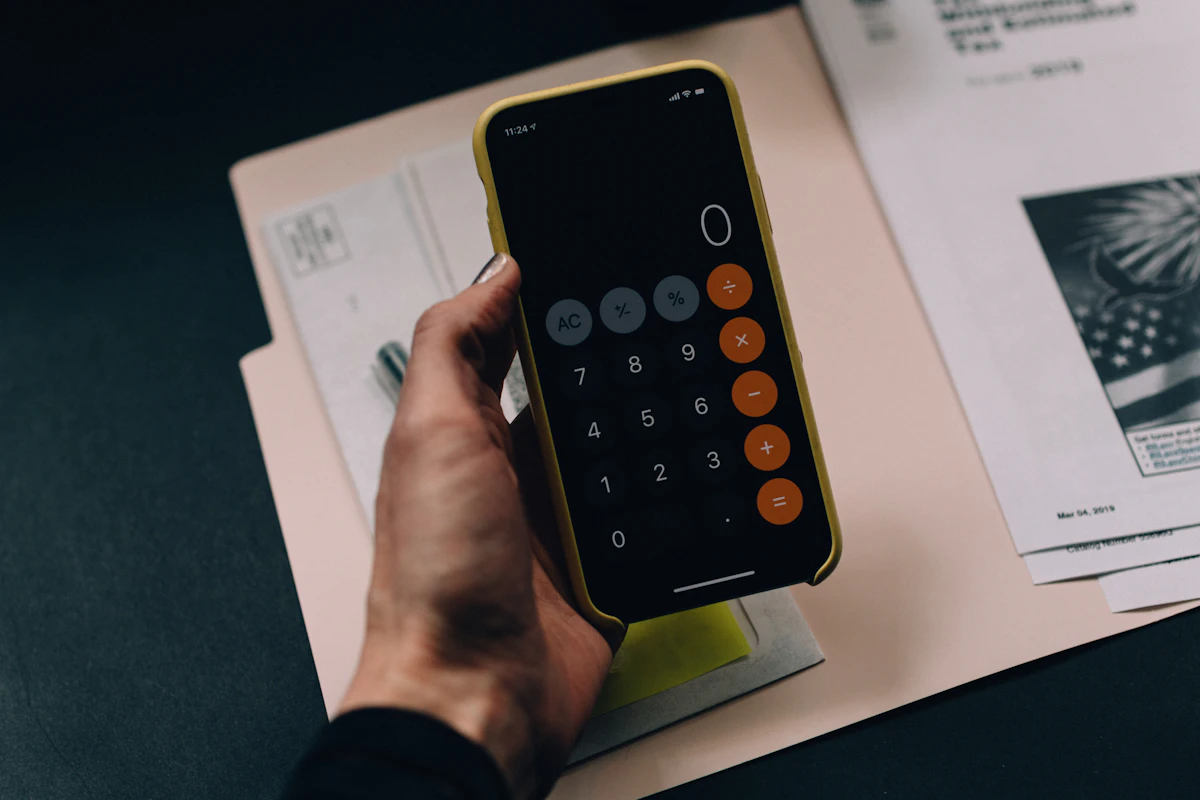
Photo by Towfiqu barbhuiya on Unsplash
What Does Attending World Cup 2026 Actually Cost?
The ticket is often the smallest item in a World Cup budget. Accommodation near host stadiums during the tournament runs 2–3x the normal nightly rate. Flights booked close to the event can be double or triple off-season prices. Understanding the full cost picture before you commit is the most important financial decision in your planning process.
Budget Tier — The Shoestring Fan
A budget World Cup trip is absolutely achievable — and the match experience in Category 3 seating is identical to the football itself. The savings come from accommodation choice, fixture selection, and early booking.
- Match ticket: Category 3 group stage (non-host nation) — $80 per game
- Accommodation: shared Airbnb or hostel — $60–$120/night
- Flights: varies by origin; budget $300–$1,500 round trip for international flights booked 3+ months ahead
- Food & local transport: $40–$70/day — eat away from the stadium, use public transit
- Travel insurance: $50–$100 for a 2-week policy
- ESTIMATED TOTAL: $700–$2,500 for a 4-day trip including 1–2 group stage matches
- Best host cities at budget tier: Guadalajara, Kansas City, Atlanta, Houston
Mid-Range Tier — The Comfortable Fan
The most common first-timer spend range. Category 1 seats, a 3-star hotel, and enough flexibility to enjoy the city beyond the stadium. The key is booking accommodation and flights within 48 hours of ticket confirmation.
- Match ticket: Category 1 group stage — $190–$310 per game
- Accommodation: 3-star hotel within 5km of stadium — $150–$300/night
- Flights: $500–$2,000 depending on origin
- Food, transport & experiences: $80–$150/day
- Travel insurance: $75–$150
- ESTIMATED TOTAL: $2,000–$6,000 for a 5-day trip to 1–2 matches
- Best host cities at mid-range: Miami, Dallas, Seattle, Boston, Toronto
Premium Tier — The Experience-First Fan
For fans who want knockout stage football or the full hospitality experience, the budget ceiling rises sharply. A Category 1 seat at a semi-final or the Final itself is a genuinely once-in-a-generation spend.
- Match ticket: Quarter-final Category 1 — $620; Semi-Final Category 1 — $920; Final Category 1 — $1,850–$2,735
- Accommodation: 4–5 star hotel — $300–$700/night
- Flights: $500–$3,000
- Transport, food & experiences: $150–$300/day
- Travel insurance (ESSENTIAL at this spend): $100–$250
- ESTIMATED TOTAL: $4,000–$12,000 for a 5-day knockout stage trip
- Hospitality package add-on: $5,300–$73,200 (see our full hospitality packages guide)
📊 Book Early — Every Week of Delay Increases Your Total Cost
Host city hotels within 20 minutes of MetLife, Hard Rock Miami, SoFi, and AT&T stadiums are already 60–70% occupied for June and July peak dates as of February 2026. Prices are rising weekly. The most cost-effective decision you can make today is to lock in free-cancellation accommodation at current rates, even before your ticket is confirmed. If your ticket falls through, you cancel. If you wait and prices double, you pay the difference. See our complete World Cup 2026 cost and budget breakdown for city-by-city hotel price benchmarks.
Full World Cup 2026 Cost Breakdown →Entry Requirements: Visas, ESTA, and Travel Documents
The 2026 World Cup spans three countries with three separate immigration systems. A US ESTA does not get you into Canada. A Canadian eTA does not cover Mexico. And for fans from many of the world's biggest football nations — Brazil, India, Nigeria, Colombia, Argentina — a US B1/B2 tourist visa is required, with interview wait times at some consulates already exceeding 300 days.
Entering the USA
The USA is where 78 of the 104 matches are played. Entry requirements are the most complex of the three host nations.
- ESTA (Visa Waiver Program): Fans from 43 countries including the UK, EU, Japan, Australia, and South Korea can enter with an ESTA — apply at esta.cbp.dhs.gov for $21. Takes minutes. Valid 2 years.
- B1/B2 Tourist Visa: Required for fans from Brazil, Argentina, Colombia, India, Nigeria, Ghana, Egypt, China, and the majority of the world's other football-watching nations. Costs $185; requires an in-person interview at a US Embassy. Apply immediately — wait times are critical.
- Banned / Restricted Countries: Citizens of 19 countries face a full US visa suspension and cannot attend USA matches regardless of ticket status. An additional 15 countries face partial restrictions on B1/B2 tourist visas. Canada and Mexico matches may still be accessible.
- Apply before you do anything else — securing your entry documents is a precondition for every other planning decision.
Entering Canada (Toronto and Vancouver Matches)
Canada hosts 12 matches across Toronto and Vancouver. A US visa does not grant Canadian entry — these are completely separate immigration systems.
- Canadian eTA: required for most VWP-country passport holders to fly to Canada — CAD $7 at canada.ca; typically approved within minutes.
- Canadian Temporary Resident Visa (TRV): required for fans from India, China, Nigeria, most of Africa and South America — CAD $100, 4–8 weeks processing. Apply simultaneously with your US visa application.
- Some nationalities holding a valid US B1/B2 visa can enter Canada without a separate TRV — check the specific list at canada.ca before assuming this applies to you.
Entering Mexico (Mexico City, Monterrey, Guadalajara Matches)
Mexico has the most permissive entry requirements of the three host nations. Most international fans do not need a visa for Mexico at all.
- Mexico has visa-free agreements with over 60 countries including all EU nations, the UK, USA, Canada, most of Latin America, Japan, and South Korea
- Most fans from these countries simply arrive with a valid passport — no pre-registration or electronic authorisation required
- Exceptions: some African, Middle Eastern, and Asian nationalities require a Mexican tourist visa — check at embamex.sre.gob.mx
⚠️ B1/B2 Visa Wait Times Are Critical Right Now
Fans from India, Brazil, Colombia, Nigeria, and China applying for standard US B1/B2 interview appointments in February 2026 face wait times that in many cases already exceed the June 11 tournament start. The emergency/expedited appointment process is available for confirmed, non-refundable travel bookings — your World Cup ticket confirmation qualifies. If you need a B1/B2 visa, do not apply for a standard appointment. Apply for emergency/expedited directly. Our full visa guide covers the exact process.
Match Day Logistics: Your Step-by-Step Practical Guide
The difference between a stressful and a seamless World Cup match day is almost entirely logistical. Fans who plan the practical details in advance — transport, timing, what to bring — spend the match focusing on the football. Those who don't spend it queuing, searching for bags, or trying to figure out the train home in a sea of 80,000 strangers.
Getting to the Stadium
At World Cup 2026, driving to the stadium is almost universally the wrong choice. Parking is severely limited, expensive, and the congestion immediately around all 16 venues before and after matches is significant. Every host city has official fan transport plans — use them.
- New York/New Jersey (MetLife): NJ Transit trains from Penn Station directly to the Meadowlands — the most reliable transport option. Avoid driving.
- Dallas (AT&T Stadium): AT&T Stadium is in Arlington, between Dallas and Fort Worth. The Trinity Railway Express (TRE) connects downtown Dallas, but a taxi/Uber from downtown for the final stretch is common. Pre-book your ride home before you go in.
- Los Angeles (SoFi Stadium): Located in Inglewood — the Metro C Line (Green) to Hawthorne/Lennox and connecting shuttle is the recommended fan transport plan.
- Miami (Hard Rock): The Tri-Rail commuter line and shuttle buses are the primary fan transport options. Hard Rock Stadium has no direct subway/metro connection.
- Mexico City (Estadio Azteca): Take the Metro Line 2 to Tasqueña, then take the light rail (Tren Ligero) south — this is the local fan transport used by Azteca regulars for decades.
- For all other cities: download the city's transit app before match day and plan your route the night before, not the morning of.
Timing Guide: The Perfect Match Day Schedule
Use this timeline as your baseline for any World Cup 2026 match. Adjust for travel time from your accommodation to the stadium.
- -4 hours: Arrive in the fan zone near the stadium. Eat a full meal here — stadium food is expensive ($15–$25 for basic items at US venues) and the queues are long.
- -2.5 hours: Begin your journey to the stadium. This accounts for transit delays, walking time, and the inevitable wrong turn.
- -90 minutes: Arrive at stadium gates. This is the absolute minimum — 90 minutes gives you enough time to clear security, find your seat, get a drink, and experience the build-up.
- -45 minutes: In your seat. Watch the stadium fill. This is the experience.
- -15 minutes: National anthems. Be present. Put your phone down for 90 seconds.
- Kick-off: Enjoy your first World Cup match.
- +15 minutes after final whistle: Wait before heading to exits. The first 10–15 minutes after the final whistle are the most crowded exit times. Wait in your seat or on the concourse.
- +60 minutes: At your pre-arranged meeting point or on public transport. Do not attempt to get a ride-share immediately post-match — surge pricing peaks in the first 30–45 minutes and can be 4–5x normal rates.
What to Bring — The Complete Match Day Kit
Every item below has been field-tested across multiple World Cups by experienced fans. The list below fits comfortably into a 30x30x15cm bag — the standard maximum size at most World Cup 2026 venues.
- Match ticket — digital (screenshot it, don't rely on signal) OR printed. Have both if possible.
- Valid photo ID — passport or national ID card. Some venues require photo ID that matches the ticket name.
- Team colours or national flag — wear or carry your nation's jersey. Flags on sticks are prohibited in most US venues; scarves and hand-held flags are fine.
- Phone + power bank — you will use more battery than expected. A 10,000mAh power bank covers a full match day easily.
- Cash (local currency) — $30–$60 USD in cash for incidentals. Some stadium vendors and fan zone stalls are cash-only.
- Sunscreen SPF50+ and a hat — afternoon group stage kickoffs (1pm, 4pm) in Miami, Houston, and Dallas in June and July are extremely hot. Heat-related illness is a real risk.
- Compact waterproof layer — evening matches can see unexpected weather especially in Seattle, Vancouver, Boston, and Kansas City.
- Small transparent bag — most US venues strongly prefer or require clear bags. A 12x6 inch clear bag satisfies all North American venue policies and avoids bag check delays.
- Ear protection (optional but recommended) — full World Cup stadiums reach 100–110dB during goals. Foam earplugs are a sensible precaution, especially if you are sensitive to noise or attending with children.
What NOT to Bring
These items will either be confiscated at entry or cause delays that cost you pre-match experience time.
- Large bags exceeding 30x30x15cm — you will be sent to an off-site bag drop facility
- Outside food or beverages — all host venues prohibit outside consumption items
- Vuvuzelas, air horns, or noisemaking devices — prohibited at all 16 FIFA World Cup 2026 venues
- Selfie sticks and tripods — prohibited inside stadiums
- Professional cameras with detachable or interchangeable lenses — media accreditation required; a standard smartphone camera is fine
- Flags on rigid poles or sticks longer than 30cm — flag fabric itself is allowed; the pole is not
- Alcohol purchased outside the venue — you can drink inside the stadium; you cannot bring it in
📱 Download These Apps Before Match Day
FIFA Official App (tickets, schedule, live updates), Google Maps or Apple Maps with offline maps downloaded for your host city, the local public transit app for your host city (NJ Transit for New York, DART for Dallas, LA Metro for Los Angeles, etc.), and your ride-share app of choice with a valid payment method pre-loaded. Do not rely on downloading or setting up any of these apps on the morning of the match.
World Cup Fan Culture: The Unwritten Rules
The World Cup has a fan culture entirely its own — warmer, more international, and more genuinely celebratory than club football. For first-timers, understanding the unwritten rules makes the difference between being a spectator of that culture and being part of it.
The Traditions Every First-Timer Should Know
These are the customs that define the World Cup experience for fans who attend regularly. None of them are mandatory — but all of them will enrich your trip.
- Scarf swaps: Approaching a fan from another nation to swap scarves is one of the oldest and most appreciated World Cup traditions. It requires no common language — hold out your scarf, point at theirs. This has worked since 1966.
- Pin badge trading: Collect enamel pin badges representing national teams, host cities, or tournament editions. Fan zones and street markets near stadiums sell them for $2–$10. Trading with other fans is part of the ritual.
- National anthem respect: Stand, face the pitch, and be silent during both national anthems — even for the opposing team. Applaud at the end of both. This is expected at the World Cup in a way that is distinct from club football.
- Opposing fan courtesy: Congratulate the winning team's fans at the final whistle, even when it hurts. It earns extraordinary respect from neutrals and opposition supporters alike — and the World Cup is one of the few occasions where this actually happens.
- Fan group singing: If you don't know your nation's songs, look them up before you travel. Being able to join your team's supporter section in the chants makes your seat feel like the terrace, regardless of where in the stadium you are.
- The third-half: Post-match drinks at local bars near the stadium are as much a World Cup tradition as kick-off. Win, lose, or draw — the 'third half' is where first-timers always say the best conversations of their trip happened.
Things That Are NOT Welcome at the World Cup
The World Cup's fan culture is warm and inclusive — but there are firm norms that are universally observed by experienced fans.
- Booing the opposition's national anthem — this is considered extremely disrespectful and will draw immediate, loud disapproval from neutrals and opposition fans alike
- Leaving early when losing — walking out in the 70th minute is a guaranteed way to stand out as someone who doesn't understand World Cup culture. Stay for the 90.
- Provocation and disrespect toward opposing fans — the shared space of a World Cup stadium is not a place for tribalism of the kind seen in club football derbies
- Filming throughout the match rather than watching it — document the atmosphere, then put your phone away and experience it
🗺️ Experience the Host City — Not Just the Stadium
The best World Cup trips are built around the city, not just the match. Every host city has guided experiences — stadium area tours, cultural walking tours, food market experiences, and pre-match fan activities — that turn a one-match trip into a full cultural immersion. Browse vetted and reviewed experiences across all 16 World Cup host cities.
Staying Connected and Safe Across Three Countries
Crossing between the USA, Canada, and Mexico means dealing with different mobile networks, currencies, and safety environments. Getting these basics sorted before you travel removes the most common sources of unnecessary stress on the ground.
Mobile Data: The eSIM Solution
If you are attending matches in more than one host country — or even just arriving internationally in the USA — roaming charges on your home SIM can be extremely expensive. The most cost-effective and seamless solution for most international fans is an eSIM loaded before departure.
- Airalo offers North America eSIM data plans covering the USA, Canada, and Mexico from approximately $15–$25 for 30 days of data — activate from your phone before you board at home.
- Most modern smartphones (iPhone XS and later, recent Samsung Galaxy, Google Pixel) support eSIM. Check your device's settings under Cellular/Mobile → Add Data Plan.
- Keep your home SIM active in your physical SIM slot for calls and texts from home; use the eSIM data plan for internet while travelling.
- Alternatively: local SIM cards are available at all major US, Canadian, and Mexican airports from AT&T, T-Mobile, Rogers, and Telcel — typically $20–$40 for 30 days of data, but require a physical SIM swap.
- Stadium Wi-Fi at all 16 World Cup 2026 venues is available but unreliable during high-traffic moments (goals, half-time, full-time) when tens of thousands of fans try to use it simultaneously — do not rely on venue Wi-Fi alone.
Currency and Payments
The three host nations use three different currencies: US Dollars (USD), Canadian Dollars (CAD), and Mexican Pesos (MXN). Credit cards are accepted almost universally at stadiums and hotels, but local cash is useful — and sometimes essential — at fan zones, street food vendors, and local markets near venues.
- USA: USD. Credit cards accepted everywhere inside venues. Carry $30–$60 cash for fan zones and street vendors.
- Canada: CAD. Cards accepted everywhere. The currency exchange rate from USD is approximately 1:1.38 (check current rates before travel).
- Mexico: MXN. Cards accepted at major venues and tourist areas. Cash is important for markets, street food, and local transport. Use ATMs at airports or major bank branches rather than street kiosks.
- Avoid airport currency exchange desks — they offer significantly worse exchange rates than ATMs or online exchange services. Use a travel card (Wise, Revolut) or your bank's debit card at local ATMs for the best rates.
Safety: Realistic Advice for All Three Host Nations
World Cup host cities operate at elevated security levels throughout the tournament. The practical safety picture for most fans is very positive — but sensible precautions are always relevant at events drawing millions of visitors.
- USA: World Cup host cities have large security operations in place. Standard tourist precautions apply — stay aware of your surroundings, use official transport at night, keep valuables out of sight in crowded areas.
- Canada: Toronto and Vancouver are two of the safest major cities in North America. Standard urban awareness applies near stadium areas post-match.
- Mexico — Mexico City, Monterrey, Guadalajara: These are world-class football cities with strong fan culture and FIFA security coordination for World Cup matches. Stick to tourist and stadium areas, use registered taxis or Uber, avoid wandering unfamiliar areas after midnight. The match day experience itself is among the most exhilarating of any host city.
- Ticketing fraud is the highest-risk 'safety' issue for most fans — never buy tickets from unofficial sources, never hand cash to strangers outside stadiums, and never follow someone who says they 'have tickets for sale outside'.
- Keep digital copies of all documents — passport data page, visa/ESTA approval, travel insurance policy — on your phone AND in a cloud backup (email them to yourself). If your wallet or bag is stolen, these copies are essential.
- Share your daily itinerary with a trusted contact at home — where you're staying, which matches you're attending, and your return flight details.
🛡️ Travel Insurance Is the Most Important Thing on This List
A medical emergency in the USA without travel insurance can cost $50,000–$200,000+. A flight cancellation without coverage means losing every non-refundable booking. A stolen passport without an emergency document service means days lost to consular administration. Travel insurance for a 2-week World Cup trip typically costs $50–$150 — a fraction of the financial exposure you carry without it. Compare policies at VisitorsCoverage before you finalise any other booking.
Complete World Cup 2026 First-Time Fan Preparation Checklist
Use this checklist in sequence. Each step is a dependency for the next — getting your entry documents sorted before booking non-refundable travel is not optional. Start 6 months out where possible; if you are reading this in February 2026, start today.
📱 Get Your eSIM Sorted Before You Fly
International roaming charges across the USA, Canada, and Mexico can be eye-watering on a home SIM. Airalo offers North America eSIM data plans from approximately $15–$25 for 30 days — activate from your phone at home before you board, arrive with full data connectivity from the moment you land.
Calculate Your Total World Cup 2026 Trip Budget
Use our interactive World Cup 2026 Trip Calculator to get a personalised cost estimate based on your origin country, host city choice, number of matches, and accommodation preferences.
Calculate My World Cup 2026 Trip Budget →World Cup 2026 First-Time Fan: Frequently Asked Questions
Your First World Cup Starts Now
World Cup 2026 is a once-in-a-generation opportunity. The biggest edition of the tournament ever staged, on North American soil, spanning 16 cities and 104 matches from June 11 through July 19. For first-time fans, the planning is real — entry documents, tickets, accommodation, flights, insurance, and logistics all demand attention in the right sequence. But every first-timer who has ever walked into a World Cup stadium for the first time reports the same thing at the final whistle: I should have done this sooner. Everything you need to plan this trip is on KickoffAdventures — from the visa guide to the cost calculator to the individual stadium guides for all 16 host cities. Start with your entry documents today. Then your ticket. Then everything else falls into place.
Stay connected across all 16 host cities — no roaming fees
Attending matches in multiple cities? An eSIM lets you activate local data before you land with no physical SIM swap required. Airalo covers 200+ countries with instant digital delivery.
63% Off NordVPN — World Cup Travel Deal
Fan zones, airports, and stadium concourses run shared public Wi-Fi — the same networks scammers use to intercept ticket logins, banking apps, and travel accounts. NordVPN encrypts your connection instantly. New signups currently get up to 63% off + 3 extra months free. Takes 2 minutes to set up before your trip.