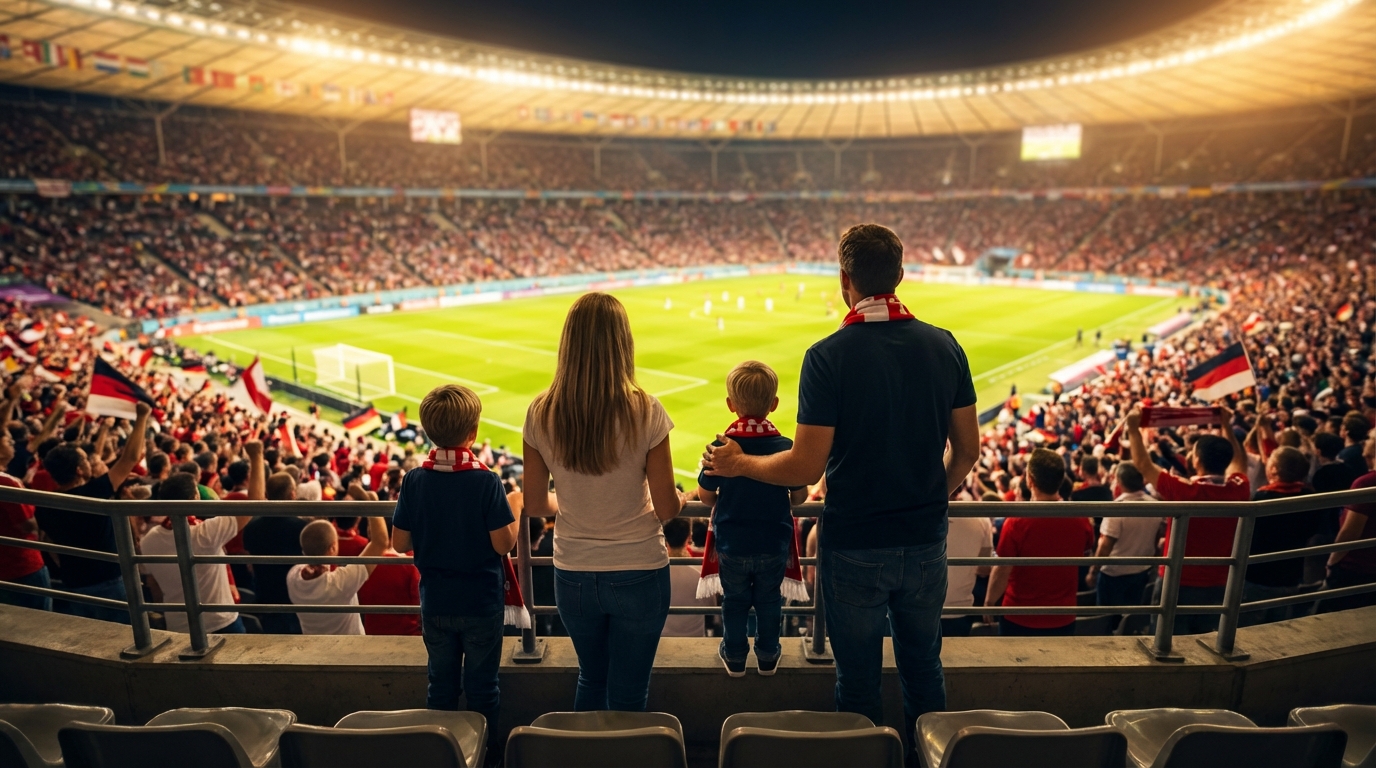
Taking children to the World Cup is one of the most memorable things a football-loving family can do. The 2026 tournament — the largest in history across the USA, Canada, and Mexico — is also the most logistically complex. From stroller policies to baby formula rules, FIFA Family Zones to altitude warnings in Mexico City, sensory rooms to lost child protocols, this guide covers everything parents need to know to make the trip genuinely enjoyable rather than exhausting.
Best Host Cities for Families with Kids — All 16 Venues
All 16 venues are accessible for families, but some host cities offer dramatically better day-trip and activity options for children. The table below rates all 16 cities on weather, kid-friendly attractions, stadium accessibility, and overall ease of travel with young children.
| Host City | June/July Weather | Top Family Attraction | Ease for Families | Best For |
|---|---|---|---|---|
| Toronto (BMO Field) | 65–75°F (18–24°C) — mild, occasional rain | CN Tower, Ripley's Aquarium, Canada's Wonderland (30 min) | ⭐⭐⭐⭐⭐ — TTC transit, walkable downtown | Younger children, first international trip, mixed-age groups |
| Vancouver (BC Place) | 65–72°F (18–22°C) — mild, scenic | Stanley Park, Capilano Suspension Bridge, Grouse Mountain | ⭐⭐⭐⭐⭐ — SkyTrain direct, outdoor city | Nature-loving families, tweens and teens |
| Seattle (Lumen Field) | 65–75°F (18–24°C) — mild, low humidity | Space Needle, Pike Place Market, Ferry to Bainbridge Island | ⭐⭐⭐⭐⭐ — Link Light Rail direct, walkable waterfront | Outdoorsy families, older kids, school-age explorers |
| San Francisco/Bay Area (Levi's Stadium) | 60–70°F (15–21°C) — cool, can be foggy | Golden Gate Bridge, Alcatraz, Fisherman's Wharf, Academy of Sciences | ⭐⭐⭐⭐ — BART to Millbrae then VTA, manageable | Curious families, older children who love landmarks |
| Los Angeles (SoFi Stadium) | 72–82°F (22–28°C) — dry and sunny | Disneyland (30 min), beaches, Universal Studios | ⭐⭐⭐⭐ — car recommended, but attractions are close | Families with theme park fans aged 5–14 |
| New York / New Jersey (MetLife Stadium) | 78–88°F (25–31°C) — warm, humid | NYC attractions (Statue of Liberty, Central Park, AMNH) | ⭐⭐⭐⭐ — NJ Transit direct, massive city options | Families combining football with a city break, teens |
| Boston (Gillette Stadium) | 70–80°F (21–27°C) — pleasant | Freedom Trail, New England Aquarium, Fenway Park | ⭐⭐⭐⭐ — Commuter Rail from South Station | History-loving families, school-age children |
| Philadelphia (Lincoln Financial Field) | 80–88°F (27–31°C) — warm, humid | Liberty Bell, Franklin Institute, Philadelphia Zoo | ⭐⭐⭐⭐ — SEPTA transit, compact city | Families combining history and sport |
| Kansas City (Arrowhead Stadium) | 82–92°F (28–33°C) — hot, thunderstorm season | National WWI Memorial, Worlds of Fun theme park, Zoo | ⭐⭐⭐ — car-based, but venue well-organised for families | Mid-continent families, road trip stopover |
| Dallas / Arlington (AT&T Stadium) | 92–100°F (33–38°C) — very hot, intense sun | Cowboys Stadium tour, Fort Worth Zoo, Perot Museum of Nature | ⭐⭐⭐ — car essential; AT&T Stadium has excellent indoor cooling | Families who handle heat well; indoor-loving kids |
| Atlanta (Mercedes-Benz Stadium) | 85–93°F (29–34°C) — hot, humid, afternoon storms | Georgia Aquarium (largest in Western Hemisphere), World of Coca-Cola, Zoo Atlanta | ⭐⭐⭐⭐ — MARTA rail direct, excellent indoor attractions | Aquarium-loving kids, families wanting indoor days |
| Miami (Hard Rock Stadium) | 88–95°F (31–35°C) — very hot, humid, daily storms | Miami Beach, Jungle Island, Everglades day trips | ⭐⭐⭐ — car needed, heat management critical | Families who want beach holiday + football |
| Houston (NRG Stadium) | 92–98°F (33–37°C) — very hot, high humidity | Space Center Houston, Houston Zoo, Children's Museum of Houston | ⭐⭐⭐ — car-based city, NRG has great shade structures | Space enthusiast kids, families who handle heat well |
| Guadalajara (Estadio Akron) | 72–82°F (22–28°C) — warm days, cooler nights, rainy season | Tlaquepaque artisan village, Guadalajara Zoo, Tequila Town UNESCO day trip | ⭐⭐⭐⭐ — manageable altitude (1,566m), good city transit | Culturally curious families, tweens and older |
| Mexico City (Estadio Azteca) | 65–75°F (18–24°C) — cooler than expected, rainy afternoons | Xochimilco boat rides, Chapultepec Zoo (free), Lucha Libre shows | ⭐⭐⭐ — altitude warning (2,240m), allow 48–72hr acclimatisation | Adventure families, teens; not ideal for infants or toddlers |
| Los Angeles (Rose Bowl, Pasadena) | 80–90°F (27–32°C) — hot, dry, sunny | Old Town Pasadena, Huntington Library Gardens, JPL | ⭐⭐⭐ — car recommended from LA; Pasadena is quieter than central LA | Families already based in greater LA area |
Book Family-Friendly Activities in Your Host City
From the CN Tower in Toronto to the Georgia Aquarium in Atlanta — book kid-friendly experiences near every World Cup 2026 venue in advance. Match-week availability sells out fast.
Age-by-Age Guide: What to Expect at Every Stage
Every child's World Cup experience is different depending on their age. Here is a practical breakdown of what to expect — and how to prepare — for each age group.
Under 2 (Infants — no ticket required)
Infants under 2 years old (under 34 inches/86cm) do not need a separate ticket and sit on a parent's lap. However, the stadium environment is challenging: noise levels of 100–120dB during goals, no re-entry if the baby becomes distressed, and strollers must be checked outside. For most families, the FIFA Fan Festival is a far better experience for under-2s — free entry, open air, lower noise, and easy exit. If you do bring an infant to the stadium: ear defenders are non-negotiable, schedule the match around nap times, and sit in an aisle seat with Family Zone designation.
2–4 (Toddlers)
Toddlers can have a magical time but require significant planning. Strollers must be checked outside — use a lightweight carrier inside. Bring their favourite snacks (sealed, permitted under FIFA policy). Toilet urgency is real — aisle seats are mandatory. Toddlers rarely last 90 minutes at full concentration; the Fan Festival is a better primary experience, with one stadium match as an optional bonus if they are ready.
5–9 (Young Children — the sweet spot)
This is the most rewarding age group for a first World Cup match. Children aged 5–9 are old enough to understand the game, feel the atmosphere, and form lasting memories — but still young enough to be amazed by everything. They can handle 90 minutes in the stadium with the right preparation (snacks, ear defenders, a favourite player to look out for). Choose a Group Stage match with two teams they recognise, sit in the Family Zone, and let them wear the shirt of their favourite nation.
10–14 (Tweens)
Tweens are ideal World Cup companions. They can handle knockout matches, navigate the stadium independently within the group, and genuinely engage with the football. Let them help choose the match — their investment dramatically improves the experience. A Knockout Round match at this age is a genuinely life-defining memory. Consider giving them a budget for food and a souvenir to manage independently.
15–17 (Teenagers)
Teenagers can be semi-independent at the World Cup. Under-16s still require an accompanying adult (18+) per FIFA rules, but 16–17 year olds have more flexibility. Agree on a meeting point before entering the stadium. The Fan Festival is an excellent space for teenagers to explore independently while parents relax. Consider giving older teens a City Day — a day to explore the host city independently — as a highlight of the trip alongside the match itself.
Choosing the Right Seats for Families
Seat selection is arguably the most important pre-match decision for families. FIFA designates Family Zones in all 16 stadiums — these are alcohol-free sections with FIFA-monitored fan behaviour codes. Category 3 and 4 tickets (upper deck) are cheaper and sit in sections with naturally lower alcohol consumption, while offering equally good panoramic views for children who care more about seeing the full pitch than being close to it.
- Request FIFA Family Zone seats when purchasing tickets — note preference on the official FIFA ticketing platform
- Category 3 or 4 seats: upper deck, significantly cheaper, fewer intoxicated fans, panoramic views children love
- Aisle seats: critical for bathroom trips mid-game — worth paying a small premium or requesting specifically
- Avoid: supporter sections (extremely loud, heavy alcohol, standing all match), Category 1 lower bowl corners (poor sightlines for short children)
- Children under 16 must be accompanied by an adult aged 18+ — arrange seating accordingly if your group spans multiple families
- Children under 2 do not require their own ticket and sit on a parent's lap — one infant per adult
Ear Protection Is Non-Negotiable for Under-10s
World Cup stadium noise regularly reaches 100–120 decibels during goal celebrations and key moments — the equivalent of standing next to a running chainsaw. FIFA has explored sensory-friendly quiet zones at recent events, but these are not guaranteed at all venues. Bring noise-cancelling headphones or foam ear defenders for any child under 10, and crucially, put them on before the national anthems — that is the moment the volume spikes sharply. Frame the headphones positively before the match: 'these help you hear the crowd better' prevents match-day resistance from an excited child who does not want to wear them.
Strollers at World Cup 2026 — What You Need to Know
Pushchairs and strollers are not permitted inside any World Cup 2026 stadium. This is one of the most common surprises for families attending their first major FIFA event. Plan your stroller strategy before match day.
- Strollers must be checked at external Binbox locker stations outside stadium gates before security — arrive 90 minutes early to allow time
- Inside the stadium, use a baby carrier, front-facing sling, or structured carrier for infants and toddlers
- Recommended travel strollers: lightweight models under 7kg (15lbs) fold to carry-on size and are easier to manage at stroller check-in
- Transit note: most match-day shuttle buses and light rail systems (Seattle Link, Toronto TTC) are fully stroller-accessible to the stadium gate
- NYC Subway has limited accessibility — use the official NYC World Cup shuttle buses which are fully accessible for strollers
- Do not bring your everyday heavy pram to the stadium — it will be awkward at security, heavy to check, and unavailable inside
Pre-Book Your Family Airport Transfer — Avoid Match-Day Surge Pricing
Surge pricing on match days is severe across all 16 host cities. Family airport transfers with child seats confirmed in advance — no surprises on the day. Available in 100+ countries.
Clear Bag Policy for Families — What You Can and Cannot Carry
The FIFA clear bag policy is strictly enforced at all 16 venues and applies equally to nappy bags and family carry items. Plan your family match-day bag well in advance — arriving at security with a non-compliant bag means leaving it at the car or missing entry.
- Permitted: one clear plastic bag (max 12x6x12 inches) per person — use this for snacks, sunscreen, wipes, and small items
- Permitted: one small clutch bag (max 4.5x6.5 inches) — use for wallet, keys, lip balm
- Permitted: baby milk, breast milk, and sterilised water in containers — explicitly allowed under FIFA Stadium Code of Conduct
- Permitted: sealed factory-packaged snacks for young children
- Not permitted: standard nappy bags, backpacks, non-transparent tote bags — use a clear changing bag within 12x6x12 inches
- Medical equipment: contact your venue's accessibility team at least 2 weeks before the match for advance written authorisation
- Re-entry: not permitted at any World Cup 2026 venue — once inside, leaving and returning is not allowed
Accessibility & Facilities at World Cup 2026 Stadiums
FIFA requires all 16 host stadiums to meet comprehensive accessibility standards. The table below summarises key family and accessibility facilities by venue. Always confirm with the individual stadium's accessibility team before match day as configurations can change.
| Stadium | Nursing/Feeding Room | Changing Tables | Stroller Check-In | Sensory Room | First Aid Station |
|---|---|---|---|---|---|
| MetLife Stadium (NY/NJ) | ✅ Confirmed | ✅ All accessible restrooms | ✅ Binbox external | ⚠️ Check venue page | ✅ Near every gate |
| AT&T Stadium (Dallas) | ✅ Confirmed | ✅ All accessible restrooms | ✅ Binbox external | ⚠️ Check venue page | ✅ Near every gate |
| SoFi Stadium (LA) | ✅ Confirmed | ✅ All accessible restrooms | ✅ Binbox external | ⚠️ Check venue page | ✅ Near every gate |
| Lumen Field (Seattle) | ✅ Confirmed | ✅ All accessible restrooms | ✅ Binbox external | ✅ Existing sensory room | ✅ Near every gate |
| Hard Rock Stadium (Miami) | ✅ Confirmed | ✅ All accessible restrooms | ✅ Binbox external | ⚠️ Check venue page | ✅ Near every gate |
| BMO Field (Toronto) | ✅ Confirmed | ✅ All accessible restrooms | ✅ Binbox external | ⚠️ Check venue page | ✅ Near every gate |
| BC Place (Vancouver) | ✅ Confirmed | ✅ All accessible restrooms | ✅ Binbox external | ⚠️ Check venue page | ✅ Near every gate |
| Arrowhead Stadium (KC) | ✅ Confirmed | ✅ All accessible restrooms | ✅ Binbox external | ⚠️ Check venue page | ✅ Near every gate |
| NRG Stadium (Houston) | ✅ Confirmed | ✅ All accessible restrooms | ✅ Binbox external | ⚠️ Check venue page | ✅ Near every gate |
| Mercedes-Benz (Atlanta) | ✅ Confirmed | ✅ All accessible restrooms | ✅ Binbox external | ⚠️ Check venue page | ✅ Near every gate |
| Gillette Stadium (Boston) | ✅ Confirmed | ✅ All accessible restrooms | ✅ Binbox external | ⚠️ Check venue page | ✅ Near every gate |
| Lincoln Fin. Field (PHI) | ✅ Confirmed | ✅ All accessible restrooms | ✅ Binbox external | ⚠️ Check venue page | ✅ Near every gate |
| Levi's Stadium (SF/Bay) | ✅ Confirmed | ✅ All accessible restrooms | ✅ Binbox external | ⚠️ Check venue page | ✅ Near every gate |
| Rose Bowl (Pasadena) | ✅ Confirmed | ✅ All accessible restrooms | ✅ Binbox external | ⚠️ Check venue page | ✅ Near every gate |
| Estadio Akron (GDL) | ✅ Confirmed | ✅ All accessible restrooms | ✅ Binbox external | ⚠️ Check venue page | ✅ Near every gate |
| Estadio Azteca (MEX) | ✅ Confirmed | ✅ All accessible restrooms | ✅ Binbox external | ⚠️ Check venue page | ✅ Near every gate |
Family Budget Breakdown — What It Really Costs
The existing World Cup cost guide covers adult-only trips. Here is the family-specific picture — costs for 2 adults and 2 children attending one match and spending 3 nights in a host city.
- Book hotel with a kitchenette or suite to cut food costs — cooking breakfast and snacks saves $60–80/day for a family of 4
- Buy tickets in the Cat 3/4 Family Zone — the football is identical and the experience is better for children
- Pre-book airport transfers — surge pricing on match days is severe in all 16 host cities
- Travel insurance for families with children: budget $150–300 for a policy covering medical, cancellation, and trip interruption
| Item | Budget Family | Mid-Range Family | Premium Family |
|---|---|---|---|
| 2 adult + 2 child tickets (Cat 3/4) | ~$600 | ~$1,200 | $2,400+ |
| Hotel (family room, 3 nights) | $400–600 | $800–1,200 | $2,000+ |
| Flights (family of 4, economy) | $800–1,600 | $1,600–3,000 | $4,000+ |
| Food & transport per day (family) | $120–150/day | $200–280/day | $400+/day |
| Ear protection + gear | $40–80 | $80–150 | $200+ |
| Total trip estimate (4 people) | $2,000–2,800 | $4,000–6,000 | $10,000+ |
Book Family-Friendly Hotels Near World Cup Venues
Extended-stay suites and family rooms near all 16 host city venues. Filter by free cancellation, kitchenette, and family amenities. Availability near match venues is extremely limited — book early.
Save on Food: Rent a Family Apartment Near the Stadium
A kitchen saves a family of 4 up to $80/day on food during a 3-night World Cup stay. Search vacation rentals and apartments with full kitchens near all 16 World Cup host city stadiums.
Attend a Less Popular Match for Your First Family World Cup
The biggest mistake families make at a first World Cup is going straight for the marquee game — Brazil vs. Argentina or USA vs. England. Those matches have the highest ticket prices, the loudest crowds, the most alcohol, and the most intense security queues. For a first family World Cup experience, choose a Group Stage match between two smaller nations. The football is still elite, the atmosphere is vibrant, tickets are 50–80% cheaper, queues are shorter, and the Family Zone seats are far more relaxed. Once the kids know what to expect, you can level up to a knockout round next time.
What to Do If Your Child Has a Medical Emergency
All 16 World Cup 2026 stadiums are required by FIFA to have on-site medical teams and first aid stations as a mandatory venue certification requirement.
- First aid tents are located near every gate entrance — identify yours as soon as you reach your seat
- Stewards (high-visibility vests) can call stadium paramedics immediately — do not waste time searching; flag the nearest steward
- Heat illness warning: Houston, Miami, Dallas, and Atlanta matches in July can reach 95–100°F outside. Symptoms in children: excessive sweating, dizziness, pale skin, rapid pulse. Move to shaded/air-conditioned concourse area immediately
- Hydration rule for children in heat: minimum 500ml per hour for under-12s during hot weather matches — bring sealed water bottles
- Nearest major hospitals are listed on each stadium's official visitor guide — look these up before match day, not during an emergency
- Travel insurance: strongly recommended for all international families — look for policies covering child emergency medical treatment and evacuation
- Lost child: all venues have Family Assistance Points near main gates. Write your phone number (with country code) on your child's wrist before every match
Compare Family Travel Insurance for World Cup 2026
One policy covers your entire family — medical emergencies, trip cancellation, and evacuation across all 175+ countries. Policies designed for international sporting events. Get a quote in under 2 minutes.
The FIFA Fan Festival — The Family-First Alternative
Every host city hosts a free FIFA Fan Festival running throughout the tournament. The Fan Fest is designed to be genuinely family-friendly — free admission, live big-screen match screenings, play zones for young children, fan zone activities, food vendors, and live entertainment.
- Free admission — no tickets or pre-registration required at most host city Fan Festivals
- Live big-screen screenings of all World Cup matches — watch games you do not have tickets for
- Children's play zones and supervised family areas confirmed at major Fan Festivals including Kansas City (National WWI Memorial), NYC (Liberty State Park), and Los Angeles
- Food vendors representing all 32 competing nations — an excellent cultural experience for children and teenagers
- Live entertainment, mascot appearances, and interactive football skills zones — arrive 90 minutes early for the best spots
- Fan Fest runs daily during the tournament — not just on match days — making it a great base for families on non-match days
- For under-2s and sensory-sensitive children, the Fan Festival is the recommended primary World Cup experience — lower noise, open air, easy exit
What to Pack for Kids — Family Match Day Bag
Everything must fit in two clear bags (one per adult). Plan carefully.
Plan Your Family World Cup 2026 Trip
Use our World Cup 2026 Trip Calculator to build a full family budget — matching your number of adults, children, host city, hotel tier, and match count.
Calculate My Family Trip CostBook Kid-Friendly Activities at Every Host City
From whale watching in Vancouver to Space Center tours in Houston — book in advance to guarantee availability around your match schedule. Instant mobile confirmation, free cancellation on most bookings.
World Cup 2026 with Kids — Frequently Asked Questions
Stay connected across all 16 host cities — no roaming fees
Attending matches in multiple cities? An eSIM lets you activate local data before you land with no physical SIM swap required. Airalo covers 200+ countries with instant digital delivery.
63% Off NordVPN — World Cup Travel Deal
Fan zones, airports, and stadium concourses run shared public Wi-Fi — the same networks scammers use to intercept ticket logins, banking apps, and travel accounts. NordVPN encrypts your connection instantly. New signups currently get up to 63% off + 3 extra months free. Takes 2 minutes to set up before your trip.